The Kit for Centering
Black Youth Wellbeing
About The Project
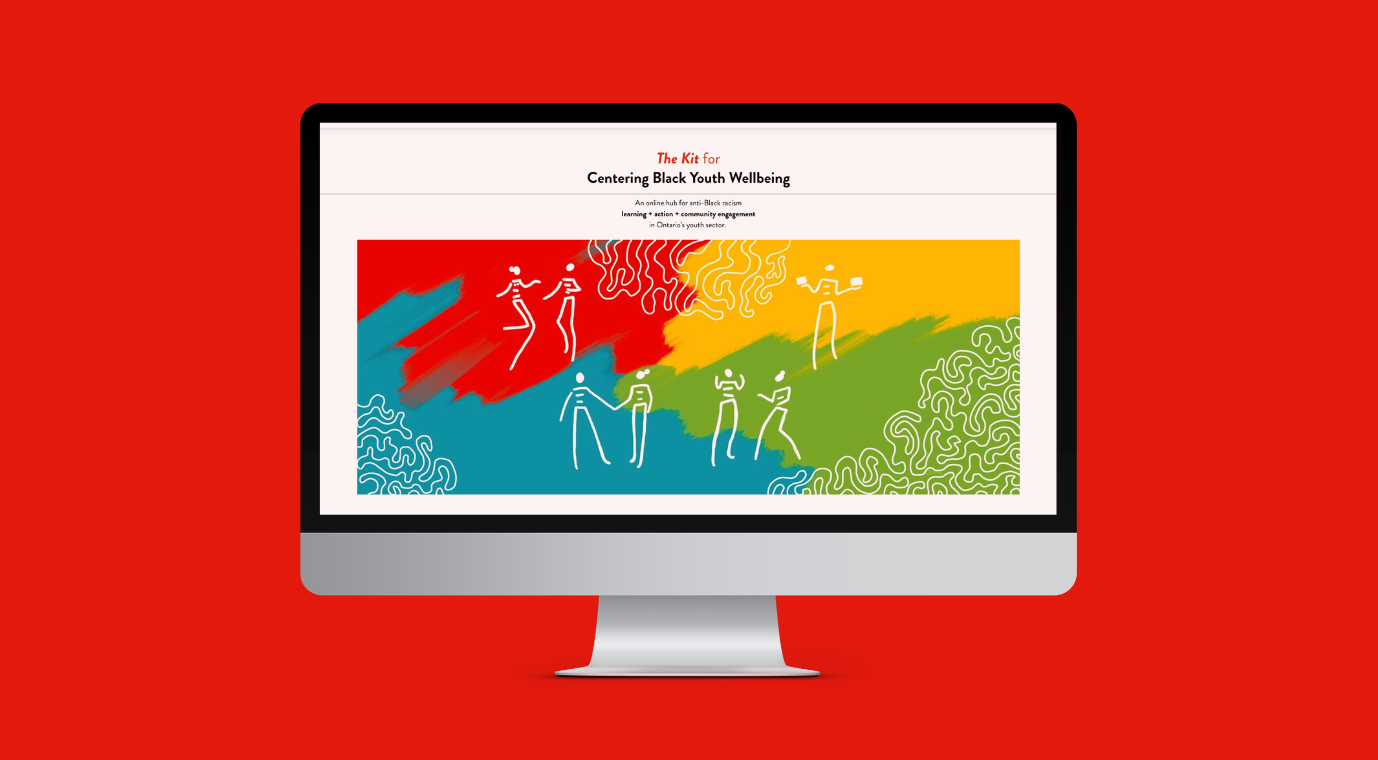
Launched in April 2024, The Kit is a YouthREX online hub that brings together learning, action, and community engagement to address anti-Black racism and center the wellbeing of Black youth, families, and communities. It connects an existing anti-Black racism certificate, the new Call-In Cards, and a Community of Practice.
My Role
As YouthREX's Brand & Design Manager, my contribution was shaping the experience and visual system across The Kit's identity and online hub, digital and physical Call-In Cards, packaging, and facilitation materials.
Focus
BRAND DESIGN
Building a visual system
around the artist's original work.
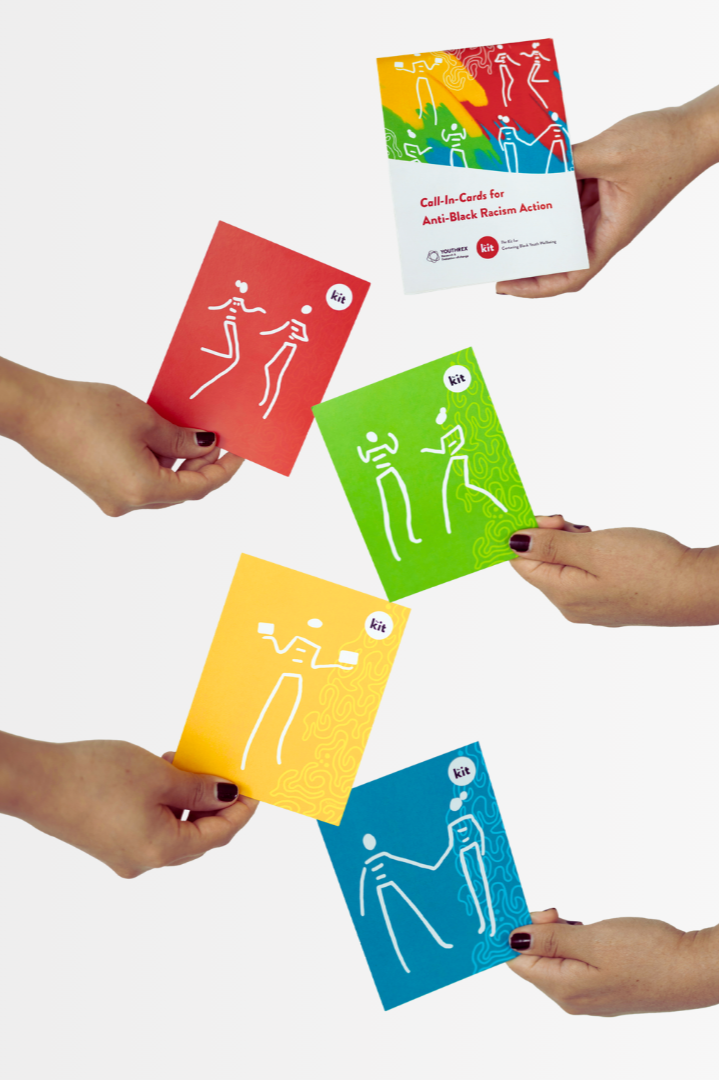
Centering Black youth voices extended into the design process itself. Toronto-based Nigerian artist Kanna Anigbogu was commissioned to interpret the four Call-In Card themes through his own perspective, bringing his distinct use of colour, expressive line work, movement, and storytelling to each theme.
My contribution focused on building the broader identity around Kanna's interpretations, keeping his artwork at the centre while connecting The Kit to YouthREX's existing brand system.
Rather than altering the original artwork, I deconstructed its visual language into a flexible set of elements, drawing from Kanna's line work, colour palette, brush textures, and forms. These became a modular toolkit that could be recombined across applications while retaining the character of his work.
The system was documented in an accessible Canva brand kit, allowing non-design team members to create new compositions while maintaining a consistent visual language.






PACKAGING & PRINT DESIGN
Turning the Act component into a tool for reflection, dialogue, and action
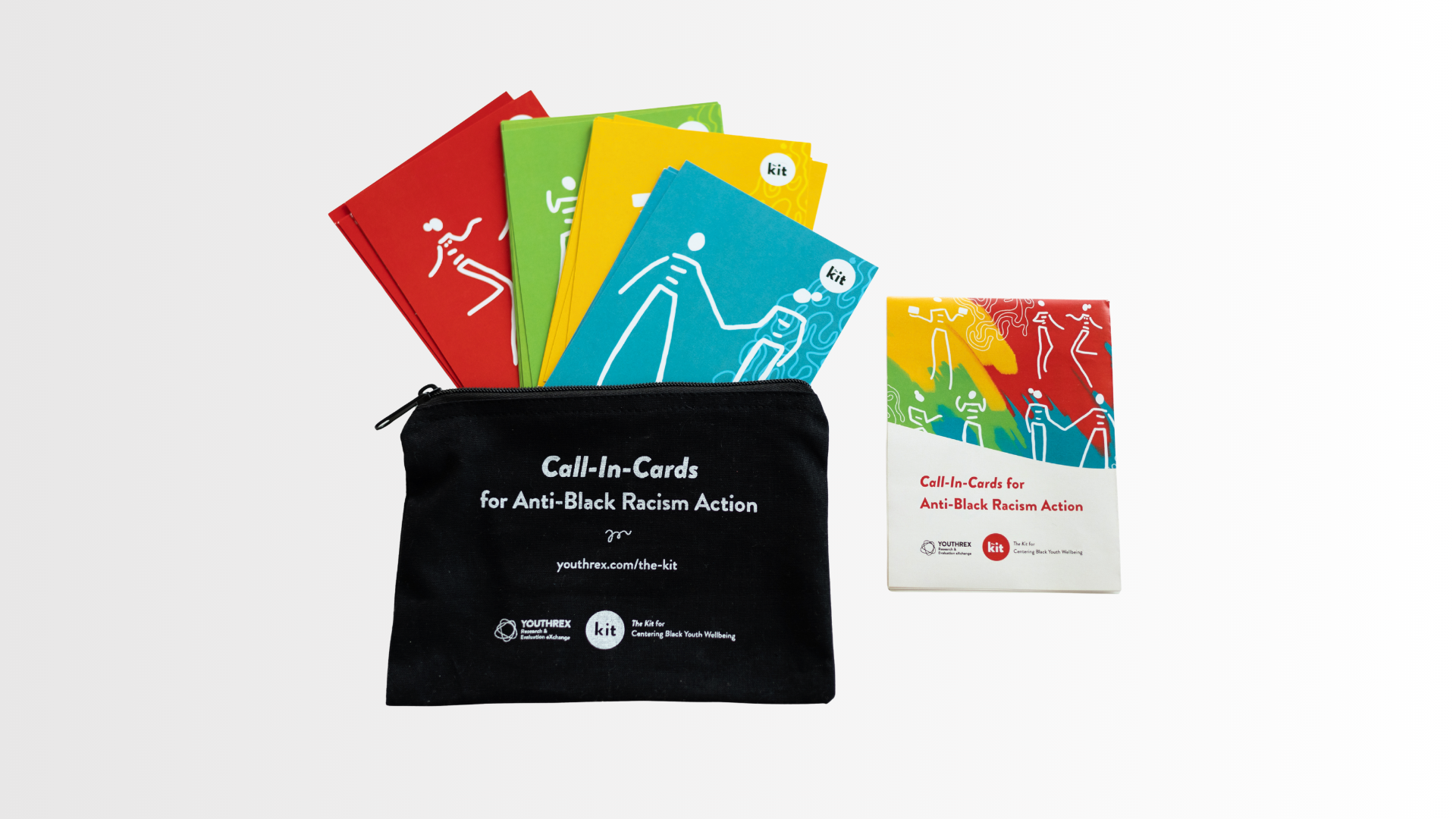
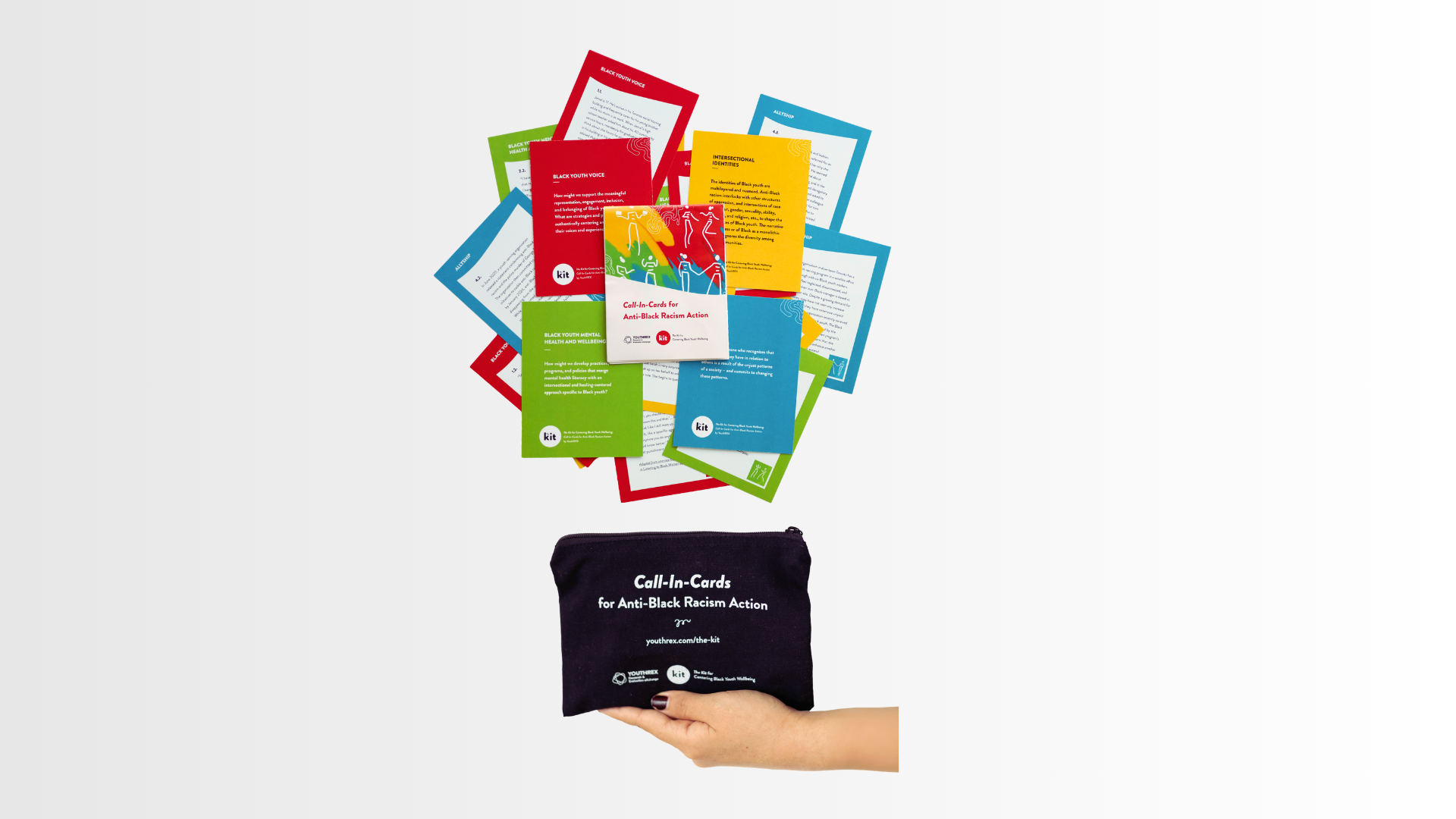
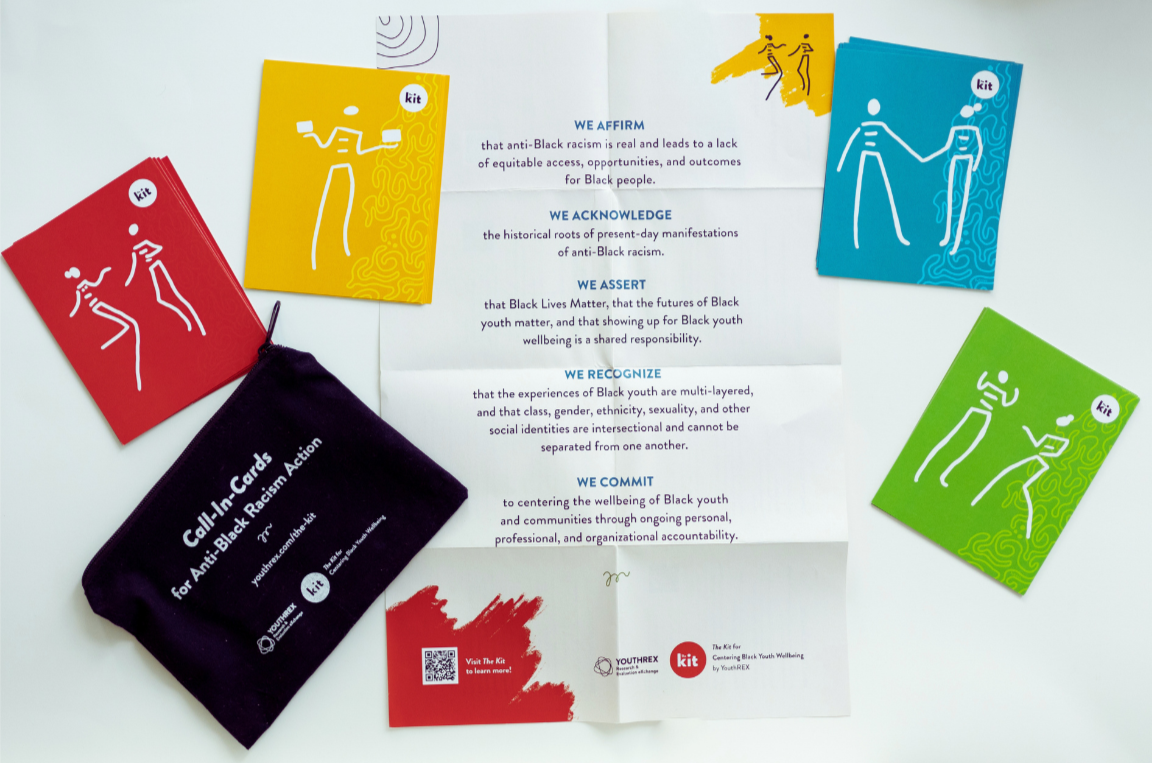
The Call-In Cards translate anti-Black racism learning into reflection, conversation, and action. Grounded in themes and scenarios surfaced through community feedback, the physical experience needed to support both individual reflection and group facilitation.
Portability and ease of use shaped the packaging approach. Four themed card decks fit within a zippered pouch that can easily move between workshops and community settings, while a compact user guide fits inside and unfolds into a poster, extending the system into a practical facilitation and learning tool.
Designing the Digital Call-In Card Experience
Translating a physical tool for reflection and dialogue into an accessible digital experience.
The Act experience brought the Call-In Cards online so the full tool could be accessed without the physical deck, whether someone was exploring independently or facilitating a workshop or group conversation.
The digital experience preserves the core interaction of the physical cards while making the four themes, scenarios, supporting resources, and printable versions easy to explore within one connected experienc
UX & SYSTEMS DESIGN
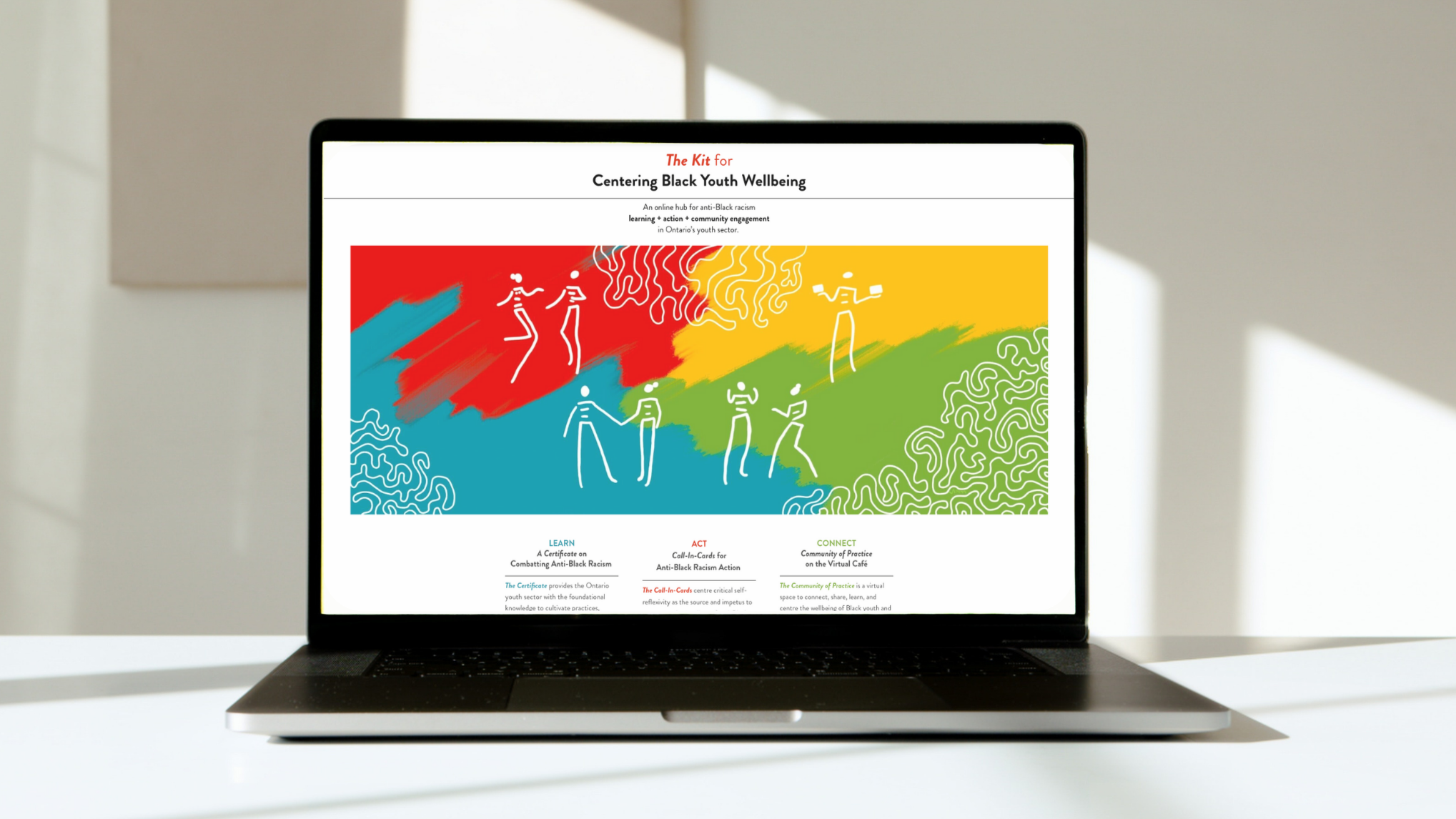
Creating a Digital Home for Learning, Action & Community
With Learn and Connect already established, the introduction of the Call-In Cards as Act created the need for a digital home that could bring all three experiences together within the existing YouthREX website.
Rather than prescribing a single path, the experience was designed so people could enter The Kit wherever they were in their journey, while creating opportunities to move between learning, action, and community over time.
-
The initial concept followed a linear journey: users would begin with Learn, move into Act, and then continue into Connect. Through the design process, we recognized that people come to anti-Black racism work at different stages of their learning journey. Requiring someone to complete the certificate before accessing the Call-In Cards could create an unnecessary barrier to tools intended to be practical and accessible.
The experience evolved into a more flexible model where each component could be explored independently while remaining intentionally connected. Someone could discover and use the Call-In Cards without having completed the certificate, while pathways throughout the experience encouraged continued learning, exploration of supporting resources, and participation in community dialogue.
I actually prefer “Read about the UX approach” over just “Read more” here because it tells a potential employer/client what they're going to learn by expanding it.
Then directly underneath this you can show your architecture / wireframes / user flows, so even someone who never expands the text still sees evidence of your process.

-
The initial concept followed a linear journey: users would begin with Learn, move into Act, and then continue into Connect. Through the design process, we recognized that people come to anti-Black racism work at different stages of their learning journey. Requiring someone to complete the certificate before accessing the Call-In Cards could create an unnecessary barrier to tools intended to be practical and accessible.
The experience evolved into a more flexible model where each component could be explored independently while remaining intentionally connected. Someone could discover and use the Call-In Cards without having completed the certificate, while pathways throughout the experience encouraged continued learning, exploration of supporting resources, and participation in community dialogue.
I actually prefer “Read about the UX approach” over just “Read more” here because it tells a potential employer/client what they're going to learn by expanding it.
Then directly underneath this you can show your architecture / wireframes / user flows, so even someone who never expands the text still sees evidence of your process.
IMPACT
Moving from a designed tool into community practice
Since launch, more than 4,000 people have accessed the Call-In Cards online, while 100 organizations have engaged with YouthREX for workshop support and adaptation.
More meaningful than reach alone has been seeing how the cards have moved beyond the platform and into practice. Organizations, educators, and facilitators have integrated them into workshops, training, classrooms, and organizational learning, adapting the tool to support reflection and conversations about anti-Black racism in their own contexts.
“What stood out to me was how several groups all came to a similar conclusion that their perspective on lived experience had changed from identity and race, to feelings and the emotional body.”
“The user guide is also really supportive, especially making distinctions of when a situation requires calling out versus calling in considering the element of safety and preventing further harm.”
“The Call-In/Call-Out Cards are so effective to initiate these conversations. What I appreciate most is that the scenarios reflect situations across various levels of an organization and are not just targeted to frontline and programming levels.”
REFLECTION
Design as a connector between research, strategy, and practice
The Kit reinforced my approach to design as a connector between research, strategy, and practice. Designing across digital, physical, and facilitated experiences challenged me to think beyond a single interface and create a system that was accessible, flexible, and cohesive across different contexts, while still feeling connected to the broader YouthREX brand.
The UX process reinforced the importance of designing for where people are, rather than prescribing where they should begin. Building the visual system around Kanna Anigbogu’s artwork also challenged me to design around an artist’s work rather than over it, keeping his artwork at the centre while building a cohesive identity around it.